- -12%
- -12%
Aquarium and pond equipment at the best prices!
For those passionate about aquariophily
Having trouble finalizing your order? Contact us 24 hours a day by email at information@zoanthus.fr.
Basin Analysis
5€ discount for your first order with the code: BIENVENUE05 (from 100€ purchase, offers cannot be combined)
Balling Products
Seawater supplements
Basic elements
Fresh Water Supplements
CO2 system
5€ discount for your first order with the code: BIENVENUE05 (from 100€ purchase, offers cannot be combined)
Water treatment
Bacterial Treatments
Adverse Treatments
Fish Care
Water treatment
Bacterial Treatments
Adverse Treatments
Fish Care
Water treatment
Bacterial Treatments
Fish Care
5€ discount for your first order with the code: BIENVENUE05 (from 100€ purchase, offers cannot be combined)
Sand
Substrate for reactor
Sea Salts
Pond Substrate
5€ discount for your first order with the code: BIENVENUE05 (from 100€ purchase, offers cannot be combined)
Seawater Equipment
Basin Equipment
5€ discount for your first order with the code: BIENVENUE05 (from 100€ purchase, offers cannot be combined)
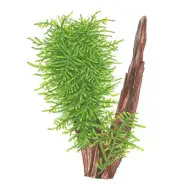
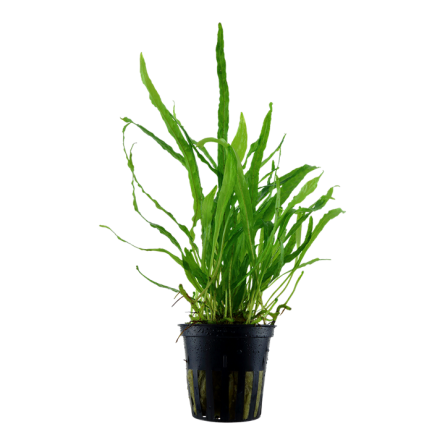
Microsorum pteropus 'Narrow' , also known as the narrow-leaved Java fern, is an ideal aquarium plant for beginners and aquascaping enthusiasts alike . It grows naturally attached to an aquarium root or rock , without the need for substrate, making it very easy to install. Its thin, elongated leaves offer a fluid and elegant movement in the water . It is not demanding: moderate light, no need for CO2, and a good ability to adapt to different parameters. In addition to being decorative, it also offers perfect hiding places for fish and shrimp . It is a plant that grows slowly but surely.

Native to Southeast Asia, Microsorum pteropus 'Narrow' is a very popular cultivar thanks to its thin leaves and more horizontal habit than its classic cousin. It grows slowly, but remains very resistant and undemanding , which makes it an ideal candidate for dressing the background or the middle ground of an aquarium without effort. With its elongated leaves of 10 to 20 cm, it brings movement and lightness to the decor.
An epiphytic plant par excellence, it is simply attached to a support – a root, a stone or even a decoration – with a nylon thread or special glue. No need to bury it in a substrate, its rhizome must not be buried under the risk of rotting. Once attached, it settles quietly and develops its typical dark green foliage, sometimes adorned with small black sporangia, completely normal and harmless.

Microsorum 'Narrow' grows well in a wide range of parameters. It thrives between 10 and 28°C, with a pH between 6.5 and 8, and a hardness ranging from 2 to 20 GH. This means that it adapts to almost any tank. Medium lighting is more than sufficient, although brighter light will encourage denser growth. It tolerates very little disturbed environments, and thrives in a low-flow filter .
Adding nutrients or a CO2 system isn't essential, but it can boost its growth a bit. Its robust nature allows it to be introduced into both new and established tanks. It tolerates even beginner mistakes, making it perfect for those who want a simple, aesthetically pleasing plant without the hassle.
Microsorum pteropus 'Narrow' propagates itself vegetatively: small shoots often appear at the tips or on the leaves . Just wait until they have some roots to detach them and attach them elsewhere. Alternatively, the rhizome can also be divided, provided each tip has a few leaves. This easy propagation makes it a durable and scalable plant in a container.
It is widely used in aquascaping for its natural look, particularly in forest or Asian river-style settings. Combined with moss or other anchored plants, it helps create shaded areas, hiding places, and much-appreciated depth effects . It pairs wonderfully with calm and discreet species. However, overly scavenging fish or voracious snails can damage it.
One last tip: when setting up, remove the plant from its pot, carefully remove the rock wool, separate the stems, and attach them directly to their support. Nothing could be simpler for a stunning result and a healthy aquarium.
Cryptocoryne beckettii 'Petchii' is an Asian variety with a wild and refined look, perfect for giving a natural and structured appearance to the front or middle of the aquarium. Native to Sri Lanka, this rosette plant is distinguished by its olive green curly leaves with a mauve reverse , which gives it a crazy charm. It grows slowly, but quickly forms beautiful thick clumps . Very tolerant, it does not require intense lighting, nor systematic addition of a CO2 system , even if these elements boost its growth. It adapts easily to the conditions of the tank and resists well to beginners. An ideal option to add a touch of elegance without complicating your life.
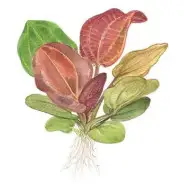
Echinodorus 'Reni' is a real gem for your aquarium. This compact cultivar is attractive for its controlled size and leaves in shades ranging from saffron red to beetroot red . It is one of the lowest growing red Echinodorus, perfect for tanks of all sizes. Its moderate growth and resistance make it an ally of choice for beginners and experienced aquarists. It thrives even without the addition of a CO2 system , and simply requires moderate light and a little nutrients to reveal its full potential. Versatile and easy to maintain, it can be planted in the background or in the background to create a lively and structured decor.
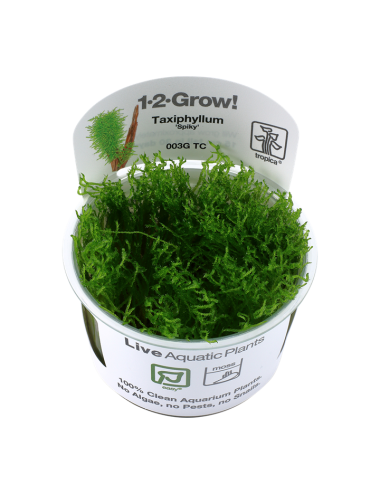
Taxiphyllum barbieri , better known as Java Moss , is one of the most popular plants in aquariums. Very easy to maintain, it grows easily and requires neither intense lighting nor a CO2 system . It can be attached to rocks, roots or left free for a natural and lush effect. This aquatic moss is ideal for providing a refuge for fry and shrimp . Perfect for community aquariums as well as for breeding tanks, it allows you to create natural decors while promoting the balance of the tank.
Bucephalandra 'Kedagang' is an exceptional aquatic plant, native to Borneo. Highly prized in aquascaping, it seduces with its dark foliage with blue or purple reflections , punctuated with small silver dots. This in vitro variety guarantees a healthy and pest-free introduction into your aquarium. It grows slowly but adapts easily to various water parameters. Unlike other demanding plants, it is content with moderate lighting and does not require a high CO2 supply. Attached to an aquarium root or a rock, it quickly becomes an essential element of your aquatic decor.
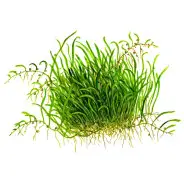
Staurogyne repens is the perfect plant to dress the foreground of an aquarium with a natural and neat look. Native to Brazil, this compact green plant settles easily and quickly forms a low, dense and bushy carpet . It grows slowly, which limits maintenance, and adapts to different types of tanks. Although it benefits from a good Co2 system and intense lighting, it can quite flourish in a low tech aquarium. It is a robust plant, which resists well to changes, ideal for giving volume and depth to your aquatic compositions, especially in a natural or Iwagumi type style.
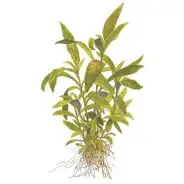
Decorative, robust and easy to plant , the Hygrophila corymbosa 'Siamensis 53B' in a mini pot is perfect for creating a dense and natural plant background . With its finely textured leaves with sometimes coppery reflections under good lighting , it transforms the bottom of the tank into a real small aquatic garden. Thanks to its moderate growth and its very simple needs, it adapts easily to low-tech aquariums, even without CO2 injection. Sold in a mini coconut pot, it is ready to plant effortlessly. It is a perfect choice for those who want a plant that is both aesthetic, practical, and requires little maintenance.
Phyllanthus fluitans , also known as Red Root Floater , is a floating plant native to South America. It is particularly popular for its heart-shaped leaves , which take on a reddish hue under intense lighting . Easy to maintain, it grows quickly and creates a spectacular surface effect while providing ideal shade for fish such as bettas. Its red roots and white flowers add a natural and original touch to any aquarium.
Bacopa caroliniana in a mini pot is a superb stem plant, native to North America, ideal for creating dense clumps in the background or middle ground . It seduces with its fleshy, oval, pretty light green leaves and its ability to form harmonious bushes in all types of aquariums. Sold in a coconut fiber pot, it is ready to plant, without preparation : just bury it where you want. With its slow growth and great adaptability, it is a perfect plant for beginners. It requires little care, moderate to strong lighting , a little patience... and it will thank you with its soothing presence and elegant foliage.
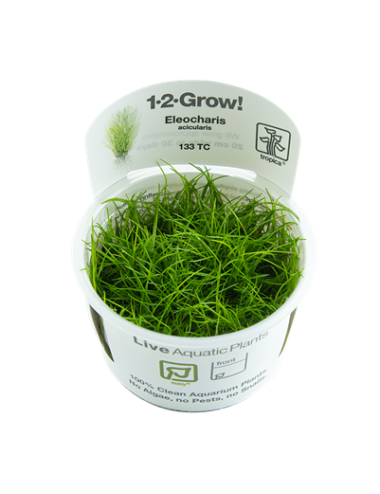
Dreaming of a lush, natural plant carpet for your aquarium? Eleocharis acicularis is the plant for you! Easy to grow, it grows quickly and adapts to a wide range of conditions. Ideal for beginners and experienced aquascapers alike, this grassy plant forms a dense, attractive carpet. It guarantees a natural look while improving water quality. Grown in vitro, it is guaranteed to be pest-free, algae-free, and free from chemical fertilizers.
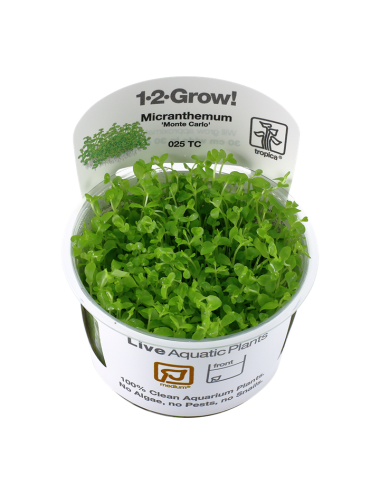
Micranthemum tweediei 'Monte Carlo' is a ground cover aquarium plant that forms a dense, lush carpet in the foreground of the tank. Native to South America, it is distinguished by its light green, rounded, and very compact foliage , perfect for creating a natural plant substrate. Easy to maintain, it thrives with good lighting and a moderate CO2 system . This versatile plant can be grown in a "dry start" to encourage its rooting before immersion. Suitable for beginners and experienced aquarists alike, it enhances any type of aquarium by adding a natural and harmonious touch.
Taxiphyllum barbieri , better known as Java Moss , is one of the most popular plants in aquariums. Very easy to maintain, it grows easily and requires neither intense lighting nor a CO2 system . It can be attached to rocks, roots or left free for a natural and lush effect. This aquatic moss is ideal for providing a refuge for fry and shrimp . Perfect for community aquariums as well as for breeding tanks, it allows you to create natural decors while promoting the balance of the tank.
Staurogyne repens is a compact and resilient aquatic plant, ideal for the foreground of your aquarium. Native to the Rio Cristalino in Brazil, this plant forms a dense, low bush thanks to its small, bright green leaves. It grows slowly and adapts easily to different aquatic environments. Its maintenance is simple: with medium light and a moderate supply of CO2, it flourishes effortlessly. Perfect for aquascaping , it creates a superb plant carpet that will enhance your natural decor. Grown in vitro, it guarantees a healthy and pest-free introduction to your aquarium.
Limnobium laevigatum , also known as Frogweed , is a floating plant native to South America. It is ideal for uncovered aquariums and adds a natural touch with its bright green leaves. Popular for its long roots that provide hiding places for surface fish, this plant is also an excellent indicator of nutrients in the water. Easy to maintain and with medium growth, it is suitable for both beginners and experienced aquarists.
Salvinia minima is a small floating fern that adds a natural and elegant touch to aquariums. Highly prized for its water-repellent leaves and rapid growth , it forms a green carpet on the water's surface, providing ideal shelter for fish and helping to limit algae growth. Easy to maintain, it grows quickly in optimal conditions and filters light for a more natural environment.
Phyllanthus fluitans , also known as Red Root Floater , is a floating plant native to South America. It is particularly popular for its heart-shaped leaves , which take on a reddish hue under intense lighting . Easy to maintain, it grows quickly and creates a spectacular surface effect while providing ideal shade for fish such as bettas. Its red roots and white flowers add a natural and original touch to any aquarium.
Riccia fluitans , also known as the water lily , is a highly versatile aquatic moss. Popularized by aquascaping master Takashi Amano , it can be used floating or attached to roots and rocks to create beautiful underwater landscapes. Easy to maintain, it forms oxygen bubbles when healthy and provides an excellent refuge for fish and shrimp. Whether you are an aquascaper or a beginner, this plant will enhance your aquarium.
What they think about it
(and they are right...)
Mélissa P.
Good (Translated review)