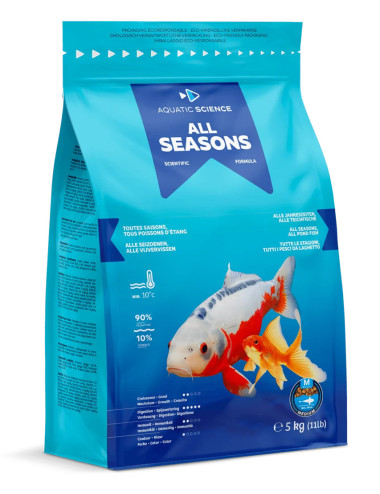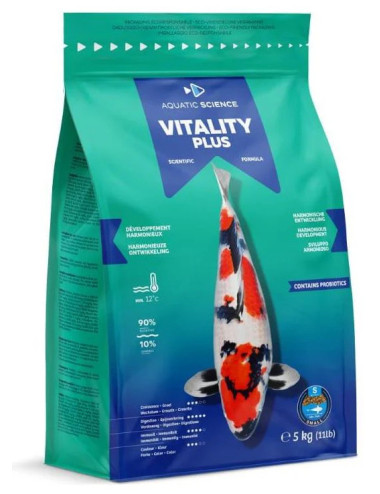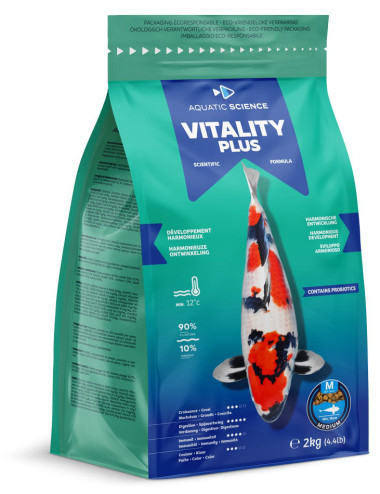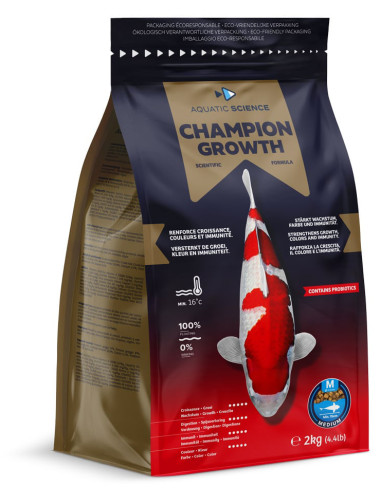


- Sold out


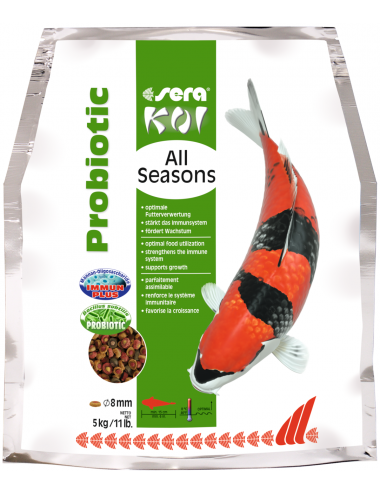
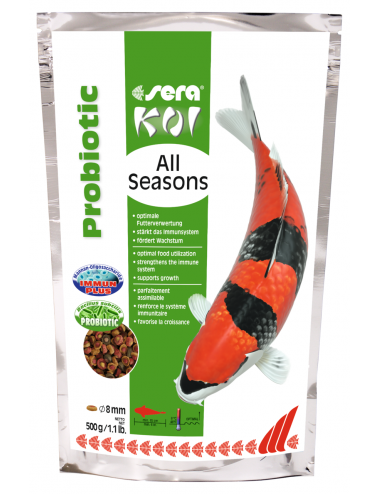
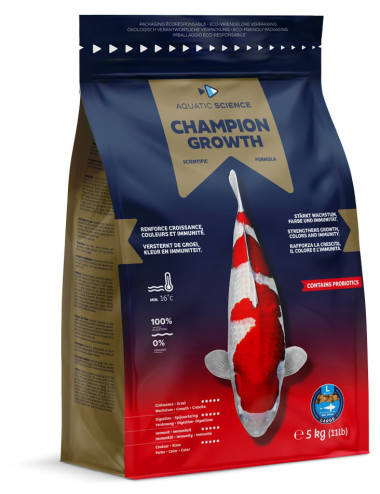
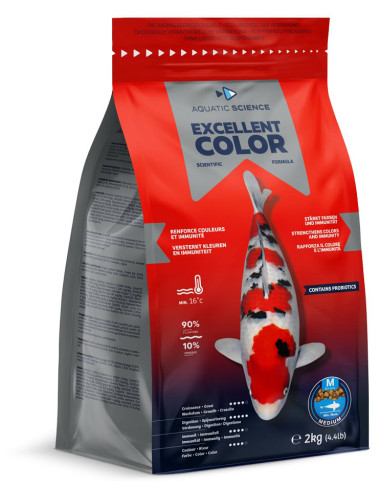
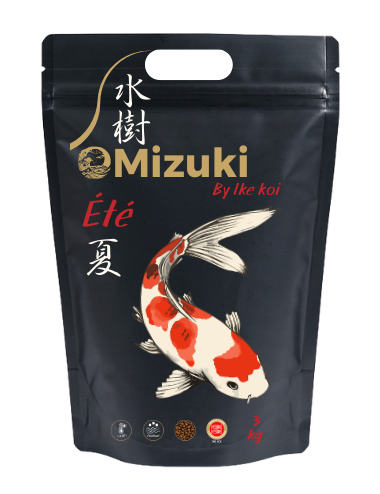
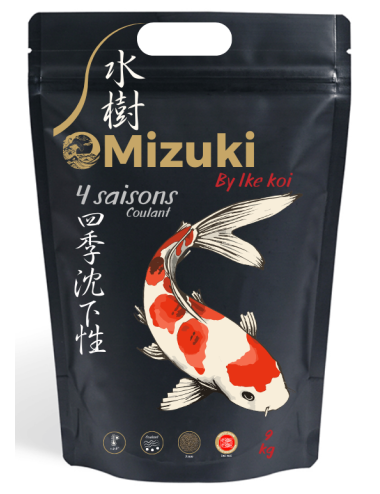
Koi Beauty Small is a complete food in the form of small floating pellets promoting the health and improving the color vibrancy of koi carp over 10 cm .
Feeding your Koi isn't just about throwing a few pellets into the pond. It's about giving them what they need to stay healthy, colorful, and vigorous . A proper diet not only helps them grow well , but also strengthens their immune system , prevents disease , and keeps the pond clean . When they eat better, everyone wins! And since they can live for over 30 years, you might as well give them the best.
Pellets are the basis of your koi's diet. Floating or sinking, they adapt to the behavior of your fish: young fish often prefer to catch food on the surface, while larger ones don't hesitate to search the depths. They come in several sizes, to be chosen according to the age of your fish, for optimal digestion and equitable distribution among the pond's occupants.
During the warmer months, choose foods rich in protein and vitamins . These promote rapid growth, an active metabolism, and vibrant coloration. Premium formulas often contain astaxanthin, vitamins A and C, and digestive enzymes that boost your koi's energy and vitality.
In addition to pellets, sticks , dried shrimp, bloodworms, or pieces of fruit and vegetables provide variety and pleasure for your Koi. They are also excellent ways to stimulate their appetite, strengthen their immune system, or improve their digestion, especially when they are enriched with garlic or probiotics.
Seasonal foods are essential for adjusting nutritional intake according to water temperature. Below 10°C, there's no need to feed your koi. Between 10 and 14°C, you should favor digestible formulas based on wheat germ. And as soon as the water temperature rises above 18-20°C, you should switch to protein-rich foods to support their summer growth. In autumn, gradually switch to a lighter diet to prepare for winter.
A fry of a few months old obviously does not have the same needs as a 60 cm adult. Small pellets (1–2 mm) are suitable for young Koi, while adults will prefer food of 6 to 10 mm. It is important to adapt the particle size to avoid rejections , limit food competition , and facilitate digestion .
Water temperature is a determining factor. The warmer it is, the faster the koi's metabolism and the greater their energy needs. Conversely, when the water cools, their digestion slows down. Choose easily digestible foods in spring and fall, and more energetic foods in summer.
Some foods contain natural agents like spirulina, astaxanthin, or canthaxanthin that intensify reds, oranges, and yellows. Others are enriched to promote growth. Alternating between these formulas helps keep fish healthy and vibrantly colored.
It is recommended to feed Koi 2 to 4 times a day during the summer period, adjusting the quantities to their appetite. Several small meals are better than one large one . A 500g fish will consume about 10g of food per day. In autumn, the frequency is reduced, until stopping completely in winter .
Excess food is the number one cause of pond pollution. To remedy this, always feed in the same place, at the same time, and stay for a few minutes to check that everything is consumed. Any uneaten food should be removed. And for better control, consider pond feeding accessories like floating rings or automatic dispensers.
Koi food should be stored away from moisture and light , in an airtight container . Improper storage reduces their nutritional qualities and can make them unfit for consumption. Preferably, use resealable bags or opaque boxes, stored in a cool, dry place.
No, feeding should be suspended in winter, generally below 8°C. Their metabolism becomes too slow to digest properly. Slowly resume feeding as soon as the temperature rises above 10°C with easily digestible foods.
Allow approximately 1.5 to 2% of the fish's weight in food per day. For a 1 kg fish, this is 15 to 20 g. Divide the ration into several portions to limit waste.
This is not recommended. Aquarium foods are not tailored to the specific needs of koi, either in size or composition. Instead, use foods specifically designed for pond fish.
The secret is to feed less, but more often . Watch the fish: if they leave food, reduce the amount. Also use accessories to better manage distribution and avoid feeding in cold weather.
Non, l’alimentation doit être suspendue en hiver, généralement en dessous de 8 °C. Leur métabolisme devient trop lent pour digérer correctement. On reprend doucement dès que la température dépasse 10 °C avec des aliments très digestes.
Comptez environ 1,5 à 2% du poids du poisson en nourriture par jour. Pour un poisson de 1 kg, cela fait 15 à 20 g. Répartissez la ration en plusieurs fois pour limiter les déchets.
Ce n’est pas recommandé. Les aliments pour aquarium ne sont pas adaptés aux besoins spécifiques des Koi, ni en taille ni en composition. Préférez des nourritures conçues spécialement pour poissons de bassin.
Le secret, c’est de donner moins, mais plus souvent. Observez les poissons : s’ils laissent de la nourriture, réduisez la dose. Utilisez aussi des accessoires pour mieux gérer la distribution et évitez tout apport par temps froid.