








- 3 in stock
Bacteria for saltwater aquarium

- 2 in stock
- 5 in stock
- 6 in stock

- 2 in stock
- 5 in stock
- -15.2%
- -15.2%
- 7 in stock
- -16.67%
- -16.67%
- 3 in stock

- -15.19%
- -15.19%
- 10 in stock

- -16.92%
- -16.92%
- 2 in stock

- 1 in stock
- 18 in stock
- 15 in stock

- 25 in stock
- 6 in stock
- 2 in stock

- 2 in stock

- 3 in stock

- 3 in stock

- 5 in stock
- 6 in stock
- 1 in stock

- 1 in stock
- 1 in stock

- 8 in stock
- -€2.00
- -€2.00
- 4 in stock

- -€3.00
- -€3.00
- 6 in stock

- -€3.00
- -€3.00
- 4 in stock

- -€4.00
- -€4.00
- 1 in stock
- 6 in stock

- 2 in stock
- 5 in stock

- 2 in stock
- 4 in stock

- 1 in stock

- 2 in stock

- -€5.00
- -€5.00
- 5 in stock

- -€3.00
- -€3.00
- 1 in stock

- -€5.00
- -€5.00
- 1 in stock
- 3 in stock

- 3 in stock

- 7 in stock

- Sold out
- -10.55%
- -10.55%
- 4 in stock

- 2 in stock
- -€5.00
- -€5.00
- 4 in stock

- 2 in stock

- -€2.00
- -€2.00
- 3 in stock

- 7 in stock
- 1 in stock

- Sold out

- 1 in stock

- 4 in stock
- 5 in stock
€52.99
-€4.00
€48.99
- -€4.00
- -€4.00
- 2 in stock

- -€3.00
- -€3.00
- 1 in stock
- 2 in stock
- 3 in stock
- 1 in stock

- 2 in stock
Why add bacteria to a marine aquarium?
In a saltwater aquarium , biological balance relies on a small, invisible miracle: bacteria. These micro-organisms, though discreet, ensure the transformation of toxic waste into substances less dangerous for the aquarium's inhabitants. Without them, the slightest excess food or fish droppings would be enough to transform the water into a veritable breeding ground for harmful organisms. By adding bacteria as soon as the aquarium is set up, we accelerate the launch of the nitrogen cycle - this natural process that transforms ammonia into nitrites, then into nitrates. This cycle is essential for the survival of fish and corals, and bacteria help stabilize it quickly and sustainably. It is also a natural and effective solution for keeping the water clear , preventing algae and limiting unpleasant surprises.
When to use a bacterial product in seawater?
The use of bacteria is not limited to aquarium start-up. On the contrary, their usefulness extends to all stages of a reef's life:
- When launching a new tank , to quickly colonize the filter media and avoid a nitrite peak.
- After drug treatment , because antibiotics also kill good bacteria.
- In case of a major water change or filter cleaning, to reseed the aquarium.
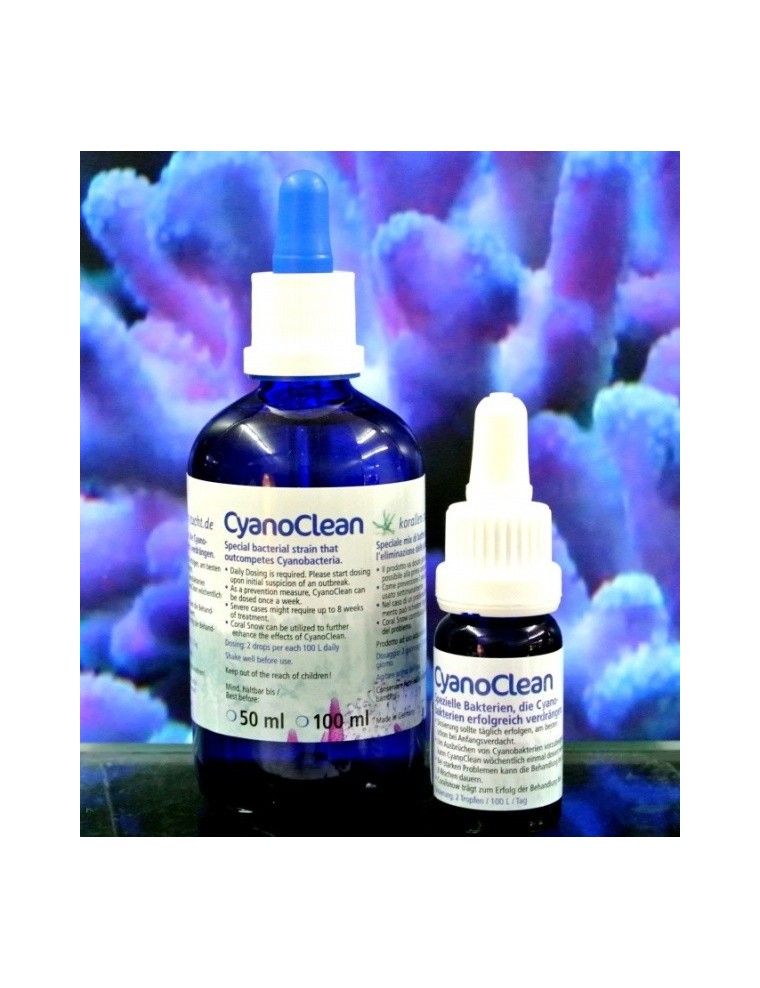
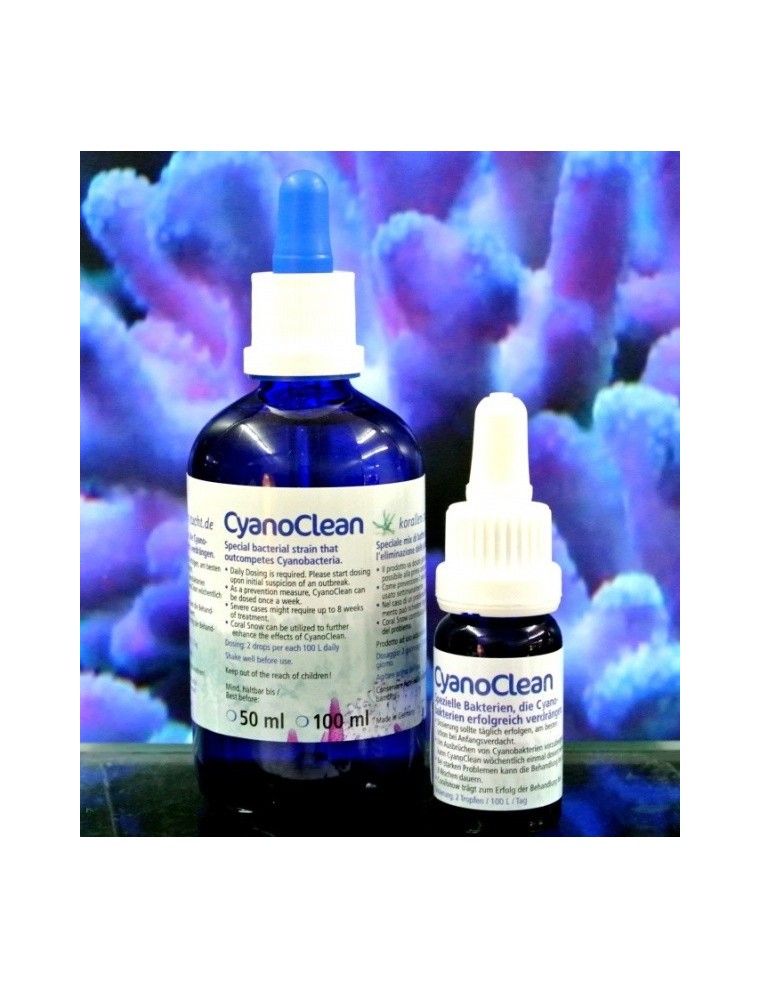
- Faced with a proliferation of algae or cyanobacteria , to restore the microbial balance.
- When adding fish in large quantities , to absorb the biological overload.
A good reflex is also to use bacteria in addition to a filter media or activated carbon , in order to maximize the purity of the water without affecting the bacterial colony.
The different types of bacteria for saltwater aquariums
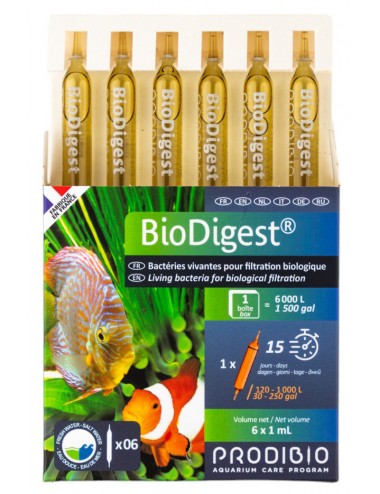
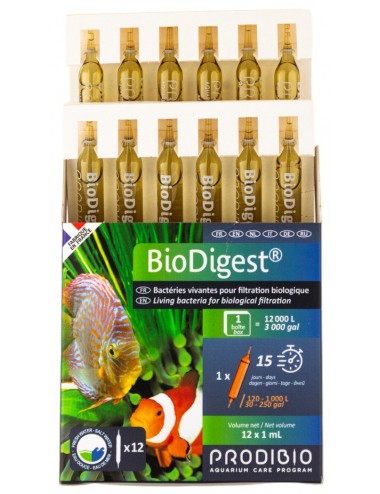
Live bacteria in vials
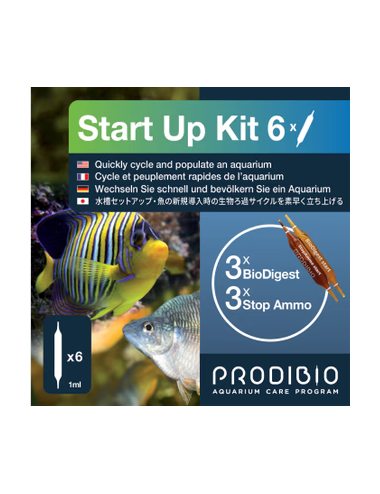
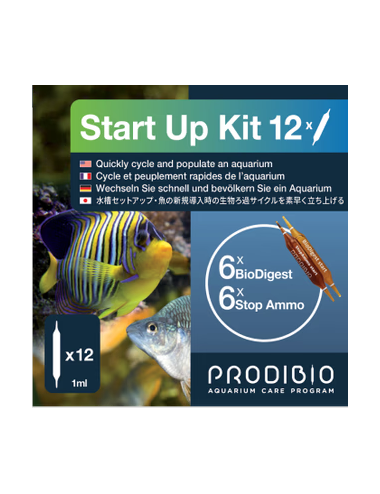
These bacteria are ready to use, often packaged in refrigerated or stabilized vials. They are perfect for seeding a freshly filled aquarium or after a major water change. Their effect is immediate: they start working as soon as they are introduced.
Bacterial starters for rapid launch
Starters are designed to accelerate the establishment of the nitrogen cycle. In just a few days, they can colonize the soil, live rock, and filter with the right strains. This is the best solution for aquarists in a hurry to populate their tank without risking a toxic spike.
Bacteria in powder or ampoules
Easy to dose, these formats are ideal for regular maintenance. In ampoules, the bacteria are often highly concentrated, as with some specialist brands. In powder form, they offer excellent value for money and can be stored for a long time, without refrigeration.
Specific strains for reef and corals
Some products target reef aquariums by providing strains of bacteria tailored to the needs of corals and invertebrates. These bacteria help reduce phosphates and nitrates, while preventing the growth of pathogenic organisms. They also improve nutrient bioavailability, resulting in more harmonious coral growth.
Tips for optimal use
The effectiveness of bacteria depends on proper use. Here are some practical tips:
- Always follow the recommended dosage . Overdosing is unnecessary, underdosing can be dangerous.
- Avoid overly aggressive cleaning of the filter or live sand. Clean alternately to preserve established colonies.
- Use dechlorinated or reverse osmosis water . Chlorine kills beneficial bacteria.
- Maintain good oxygenation . Nitrifying bacteria need oxygen to survive and multiply.
- Test your water regularly for ammonia, nitrites, and nitrates.
A well-balanced aquarium is a matter of anticipation... not reaction. Adding bacteria occasionally can prevent many long-term problems.
Questions / Answers
Should bacteria be added regularly?
Yes, especially in a reef aquarium. Bacteria live, die, and are eliminated by filtration or treatments. Regular addition helps maintain stable bacterial flora, especially after a water change or the introduction of new fish.
Do bacteria replace the natural cycle?
No. They accelerate and strengthen the natural cycle. They do not eliminate the nitrogen cycle, but they allow it to start more quickly and ensure its long-term stability.
Can we mix different bacterial strains?
In most cases, yes. Some strains complement each other. But it's important not to blindly mix everything together. Follow the manufacturer's dosages and recommendations. For targeted action, it's better to choose a consistent range or alternate strains rather than combining them all at once.