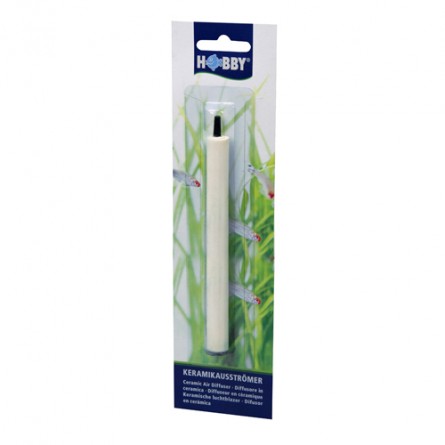
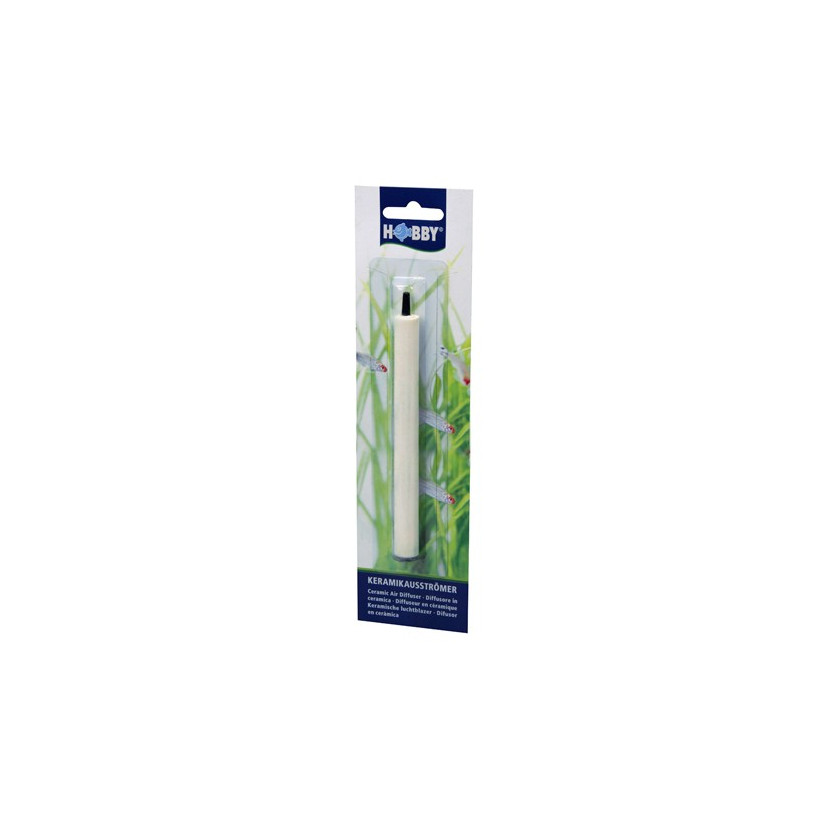
HOBBY ceramic air diffuser: fine bubbles for better oxygenation
Oxygenation plays a vital role in maintaining the balance of an aquarium. Fish, shrimp, and the bacteria present in the filtration system consume oxygen to live and perform their biological functions. The 10 cm HOBBY ceramic diffuser enhances this oxygenation by producing a multitude of tiny bubbles that rise to the surface. This movement promotes local water circulation and gas exchange between the aquarium and the surrounding air.
Unlike diffusers that produce large, irregular bubbles, this model uses fine-structured ceramic to distribute air over a larger diffusion surface. The result is a curtain of tiny bubbles that adds an aesthetic touch to the aquarium while contributing to its aeration. Gas exchange occurs primarily at the water's surface, and the movement created by the bubbles helps to renew them. This circulation helps promote oxygen uptake and the removal of excess carbon dioxide.
The HOBBY diffuser can be used to enhance aeration in a heavily stocked aquarium, improve water movement in specific areas, or complement the operation of a filter. It is also a useful accessory when oxygen requirements increase, particularly during periods of high temperatures. Indeed, warm water generally contains less dissolved oxygen than cold water , making good aeration especially important in summer.
A cylindrical, hollow design suitable for small air pumps
One of the main advantages of the 100mm HOBBY ceramic diffuser is its hollow internal design. This feature allows air to circulate within the diffuser without requiring as much pressure as some more compact ceramic models. It can therefore operate with low-power air pumps , making it a practical choice for many aquarium setups.
Small aquarium air compressors don't always provide sufficient pressure to effectively power some very dense diffusers. With its hollow structure and porous material, the HOBBY diffuser facilitates airflow through the ceramic. This design ensures consistent diffusion when the pump's flow rate and pressure are matched to the installation depth.
Its cylindrical shape, 10 cm long, also helps to distribute the bubbles over a wider area than a small, point diffuser. It can be positioned horizontally near the bottom of the aquarium to create a light curtain of bubbles or placed discreetly behind the decorations. Its size allows for a combination of efficiency and ease of installation, without requiring a complicated aeration system.
10cm ceramic diffuser: a versatile accessory for freshwater and saltwater aquariums
The HOBBY air diffuser can be used in various types of aquariums equipped with a compatible air pump. In freshwater, it complements the aeration of community aquariums, breeding tanks, or setups housing species that prefer well-oxygenated water. It can also provide supplementary aeration in aquariums where surface water circulation is limited.
In planted aquariums, the use of an air diffuser must be adapted to the needs of the plants and the tank's operation. When the aquarium is using CO2 injection, significant aeration can accelerate carbon dioxide degassing and increase its consumption. However, the diffuser can be particularly beneficial at night, when the plants are no longer photosynthesizing and continue to consume oxygen. Appropriate programming then allows for nighttime oxygenation while limiting CO2 loss during lighting .
In a marine aquarium, additional aeration can also contribute to water movement and gas exchange. However, bubbles produced directly in the main tank can be carried along by the circulation pumps and become bothersome for some animals. Therefore, the diffuser must be positioned taking into account the water circulation and the needs of the inhabitants. For reef aquariums, it does not replace the equipment usually used to ensure water movement and oxygenation, but can serve as a complementary accessory in certain setups.
Easy installation of the HOBBY air diffuser with an aquarium pump
Installing the 10cm HOBBY ceramic cylindrical diffuser is particularly simple. Just connect it to a suitable air pump using aquarium air tubing, then place it in the desired location in the tank. The diffuser can be concealed behind a root, rock, or decorative element to maintain a natural look while still benefiting from its aeration effect.
To achieve satisfactory diffusion, it is important to choose a pump capable of delivering sufficient airflow at the intended immersion depth. The deeper the diffuser is placed, the more pressure the pump must provide to circulate the air. Thanks to its hollow design requiring relatively little pressure , this HOBBY model is particularly well-suited to small pumps, provided their capacity is respected.
The diffuser's positioning also influences bubble circulation. Placed near the bottom, it creates an upwelling column that draws some of the surrounding water to the surface. Installed in an area with limited water movement, it can help improve localized water circulation. To maintain consistent diffusion, it's best to avoid burying it in the substrate or placing it against anything that could clog its pores.
Adding a non-return valve to the air hose is recommended, especially when the pump is located below the water level. This accessory helps limit the risk of water flowing back into the pump if it stops working.
Maintaining the HOBBY ceramic diffuser ensures consistent diffusion.
Like all aquarium air diffusers, the HOBBY ceramic diffuser can gradually become clogged with water. Mineral deposits, suspended particles, and biofilms can accumulate on the surface of the porous material and reduce airflow. Over time, the bubbles may become fewer, larger, or concentrated in one area of the diffuser.
Regular maintenance helps preserve the ceramic diffuser's diffusion properties. When performance begins to decline, the diffuser can be removed from the aquarium and gently cleaned with a soft brush and clean water. It is important never to use soap or household detergents , as their residues could contaminate the water and pose a risk to fish and invertebrates.
If limescale deposits are present, a cleaning method suitable for ceramic can be considered, provided the manufacturer's recommendations are followed and the diffuser is thoroughly rinsed before being put back into service. It is also important to avoid impacts and rough handling, as ceramic is a rigid material that can crack under excessive stress.