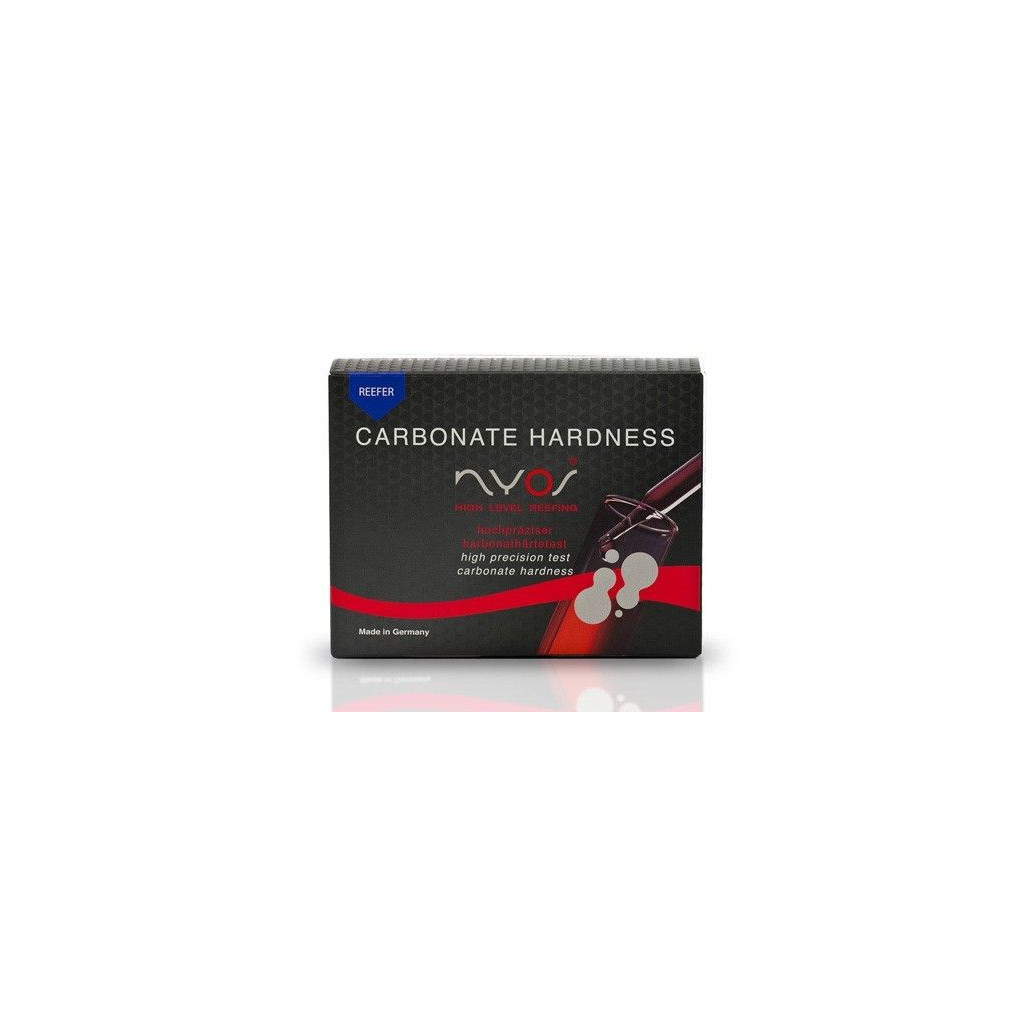







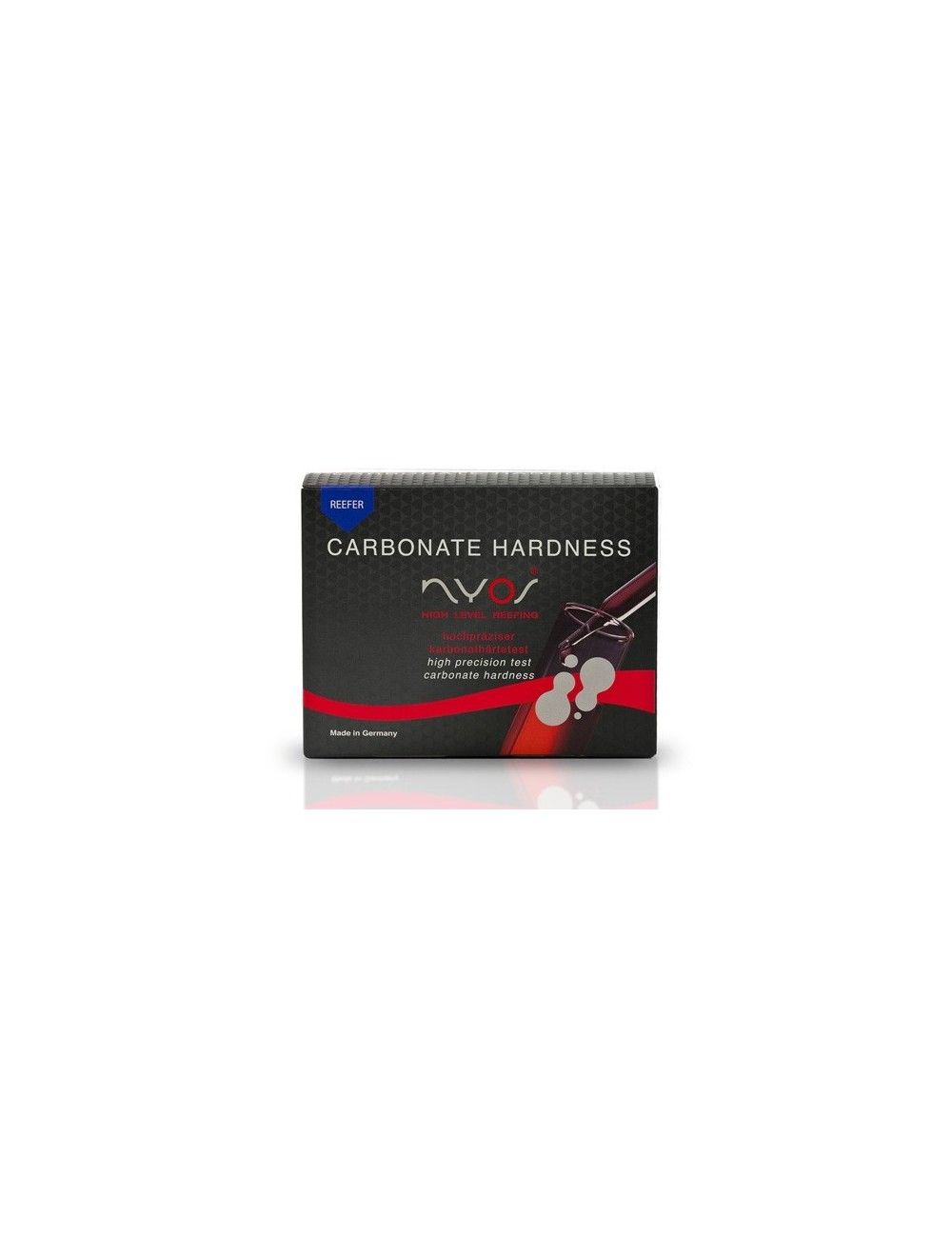


The NYOS Alkalinity Reefer measures alkalinity, also known as carbonate hardness or KH, an essential parameter in a saltwater aquarium. In a reef tank, KH plays a central role in pH stability and the healthy growth of hard corals, soft corals, and calcareous organisms. When this value fluctuates too rapidly or deviates from the recommended range, the tank's balance can become unstable. This test therefore offers a simple way to monitor this parameter, without complicated equipment or ambiguous interpretations.
Thanks to its high sensitivity , the test reacts quickly upon addition of the titration reagent. The color change is clear: the sample turns from blue to reddish-orange when the endpoint is reached. This visual reading makes monitoring easy, even for aquarists new to tracking marine parameters. Each drop added corresponds to 1 °d of carbonate hardness , making calculations straightforward and easy to remember.
The test works using a simple and reliable titration method. After collecting 5 ml of aquarium water in the provided container, simply add two drops of the CH-1 reagent. The water will then turn blue. The second reagent, CH-2, is then added drop by drop, gently mixing the sample. When the color turns reddish-orange , the number of drops used directly indicates the carbonate hardness.
This method has the advantage of being very accessible for everyday use. There's no need to spend a lot of time comparing a color to a scale that can sometimes be difficult to interpret: here, the user simply counts the drops until the color changes. The bottle simply needs to be held vertically to maintain a consistent drop size and obtain a reliable result with each measurement. This makes this test particularly convenient for weekly monitoring, or even more frequent use when the tank is being adjusted.
With up to 50 measurements per kit , the NYOS Alkalinity Reefer is ideal for aquarists who want to monitor their tank regularly. KH is a parameter that can fluctuate with coral consumption, water changes, the addition of supplements, or the use of a calcium reactor. Having a reliable test kit on hand allows for more confident adjustments to nutrient levels and avoids guesswork.
The kit is designed for ease of use: the indicators and titration solution are separate , which promotes greater long-term reliability. The included instructions in French make it even more user-friendly. This is a valuable detail, especially for a test that is frequently used and whose results can influence supplementation adjustments.
In a marine aquarium, alkalinity acts as a buffer. It helps maintain a more stable pH and plays a role in the calcification processes of corals and other reef organisms. A value that is too low can disrupt the overall balance of the tank, while a value that is too high or unstable can stress the inhabitants. For a reef aquarium, a carbonate hardness between 6.5 and 8 °d is generally recommended.
The NYOS test allows you to check if the water remains within this comfortable range. It is particularly useful in tanks containing hard corals, which regularly consume carbonates to build their skeletons. By monitoring the KH regularly, aquarists can better understand their aquarium's actual consumption and adjust their inputs more gradually. The result: a more stable tank, corals less susceptible to sudden fluctuations, and easier maintenance.
To ensure the test's accuracy, it is recommended to rinse the sampling container several times with aquarium water before beginning. The sample should then be collected using the plastic syringe to obtain exactly 5 ml of water . Once the CH-1 reagent is added, the sample will turn blue. The CH-2 reagent should then be added slowly, drop by drop, gently mixing between each addition.
The important point is to carefully count the drops until the color changes completely to reddish-orange. This step should be done calmly, with the bottle held upright. After use, the bottles must be tightly closed to preserve the reagents. It is also best to avoid any direct contact with the dropper tip to minimize the risk of contamination and ensure consistent results over time.
Like all water tests intended for marine aquariums, the NYOS Alkalinity Reefer must be stored under proper conditions. The kit should be kept in a dry, cool place away from heat , ideally at a temperature below 25°C. A cabinet dedicated to tests and maintenance products is perfect for preventing temperature fluctuations and direct exposure to light.
Clean and stable storage helps preserve the quality of reagents and therefore the reliability of measurements. Caps should be tightly closed after each use, and bottles should not be left open on the work surface. These small habits make all the difference when you want to seriously monitor the parameters of your marine aquarium, especially in a reef tank where stability remains one of the keys to success.
 Pietro D.

Everything as described, great price (Translated review)
Diego P.
Great (Translated review)
Florimond B.

Not tested yet but I fully trust the brand (Translated review)
Christian F.
Nyos tests are simple and "obvious" ( color / reference reading ) very clear; double test on some ( samples handled in // to raw sample on a double colorimetric scale for some ( Nitrates). More expensive but higher quality. (Translated review)